
Institute of Cetacean Research
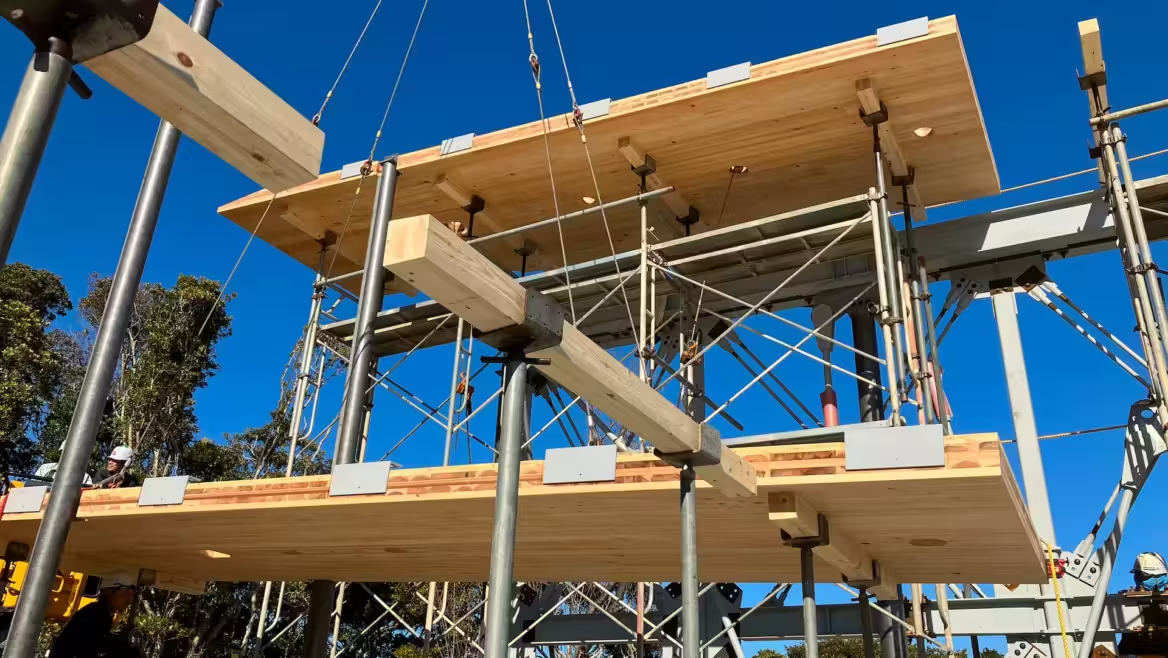
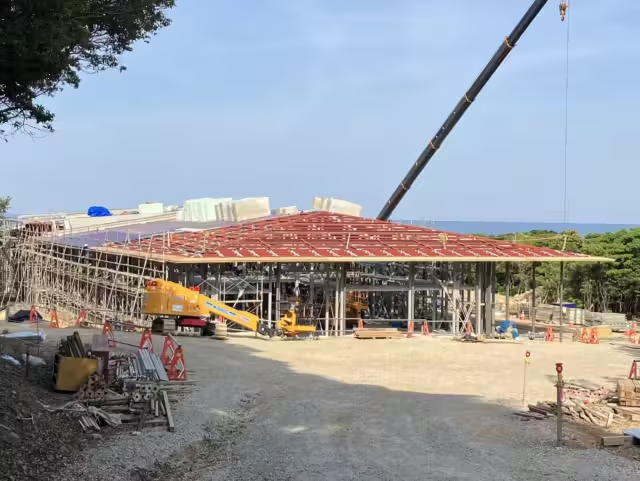
In 2023, NSS was involved in CLT ceiling installation work at the Institute of Cetacean Research in Taiji, Wakayama Prefecture. The work involved installing CLT panels across a total of 14 work sections on a ceiling composed of a combined steel and CLT structure.
Site Conditions and Constraints
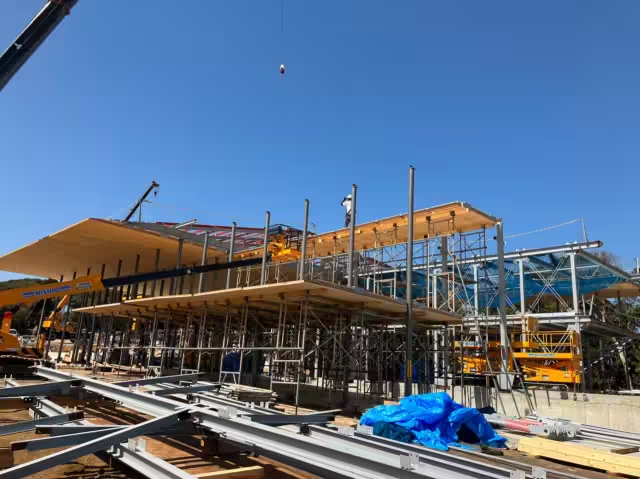
The construction sequence also involved specific constraints. In all 14 work sections, the CLT materials had to be delivered and temporarily placed before erection of the steel frame. The sequence for each section was as follows: installation of shoring → delivery of CLT materials and temporary placement on the shoring → steel frame erection (by another contractor) → CLT installation (NSS). This sequence required coordination with the steel frame erection contractor.
Construction Method and Process
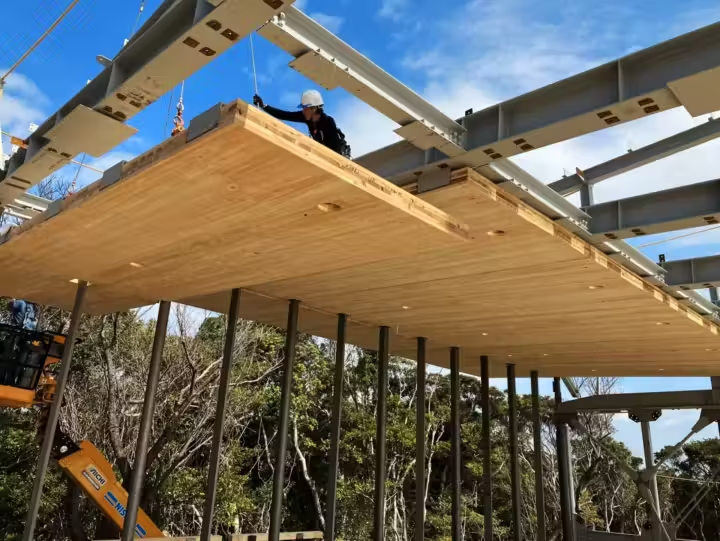
The CLT panels were installed by lifting them from their temporary position on the shoring and securing them to the lower flange of the steel beams with screws, bolts, and dowels. The panels are held in their final position by their connection to the structure, without support from below.
Lifting Adjustments for Each Work Section
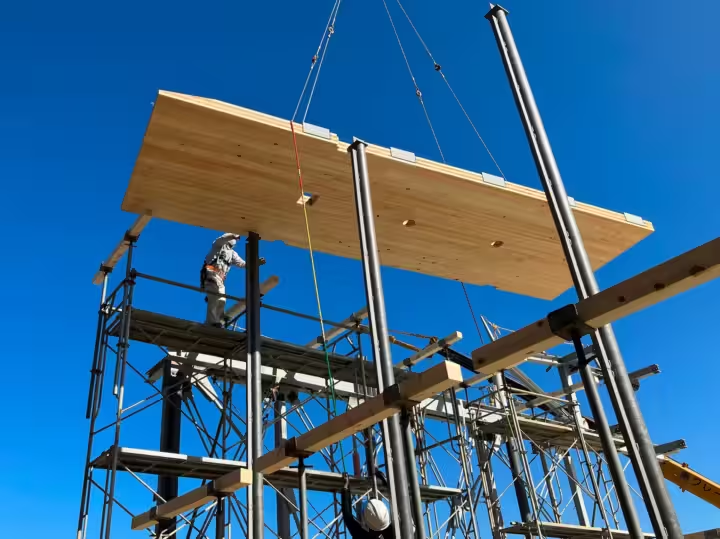
As work progressed through the sections, the existing steel columns gradually reduced the available working space. To accommodate this constraint, the panels were lifted at an angle using four chain blocks, with the lifting positions adjusted for each work section to match the slope of the steel beams.
Joint Alignment Control
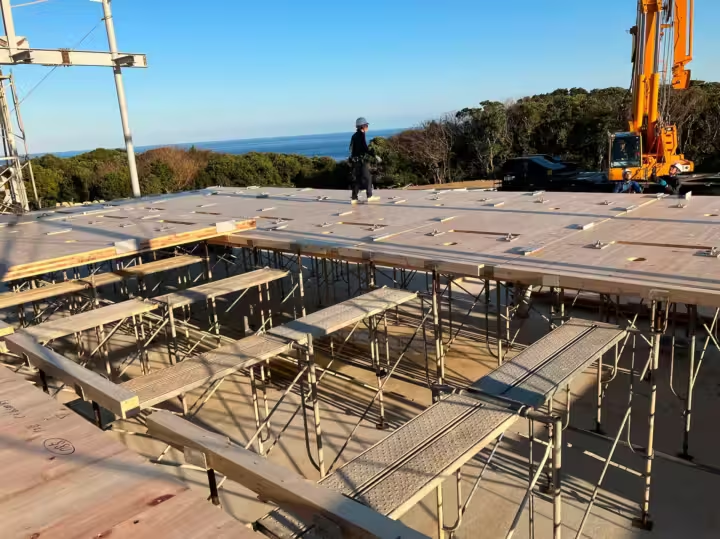
For the exposed CLT finish, the joints between panels had to be evenly aligned. Based on measurements of the actual steel frame spans taken before installation, the joint widths were reviewed in advance, and the panels were installed with repeated fine adjustments to maintain uniform spacing across all 14 work sections.
NSS’s Role and the Value We Provided
In this project, NSS was responsible for all work related to the CLT ceiling installation. This included managing the delivery and temporary placement of the panels, coordinating the work schedule with the steel frame erection contractor, and installing and securing the panels. The lifting equipment, a 70-ton rough-terrain crane, was operated by a specialist contractor.
NSS contributed to the project in two main areas. The first was carrying out the lifting work required for CLT installation. As the work progressed and the number of existing columns and beams increased, each panel was installed in its designated position by lifting it at an angle with chain blocks and adjusting the lifting position for each work section. Lifting operations involve inherent risks, and NSS carried out this work based on its knowledge and experience in this field. The second was coordinating the overall construction process across all 14 work sections. NSS completed the work while simultaneously managing temporary placement, coordination with the steel frame erection work, protection of the exposed surfaces, and joint alignment.
CLT construction techniques are widely established. However, on a hybrid-structure site where multiple contractors are working in parallel, the ability to manage protection, installation accuracy, and schedule coordination at the same time is where NSS’s experience comes into play.