HISTORY
Founded with a mission to support the employment of former base workers
In 1958, the dissolution of the United Nations forces following the end of the Korean War created a social issue in which many Japanese base workers lost their jobs.
Against this historical backdrop, Nippon Salvage Service (NSS) was established in Kyoto with the support of the Japanese government and the utilization of former United Nations military equipment, aiming to create new employment opportunities for former base workers.
On August 5, the company officially launched as the Nippon Salvage Service Company Association under the support of the system such as the "Special Treatment Act for Residents" and started its business with 2 million yen. Based on our social mission, we have taken the first step as a company with the region.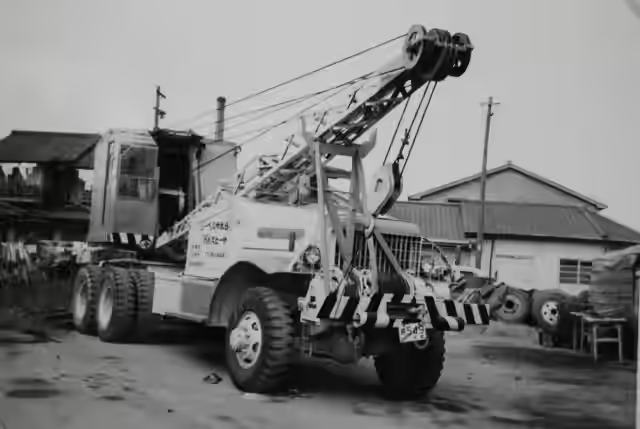
- 1958~
Launch of the Crane Business Supporting Regional Construction
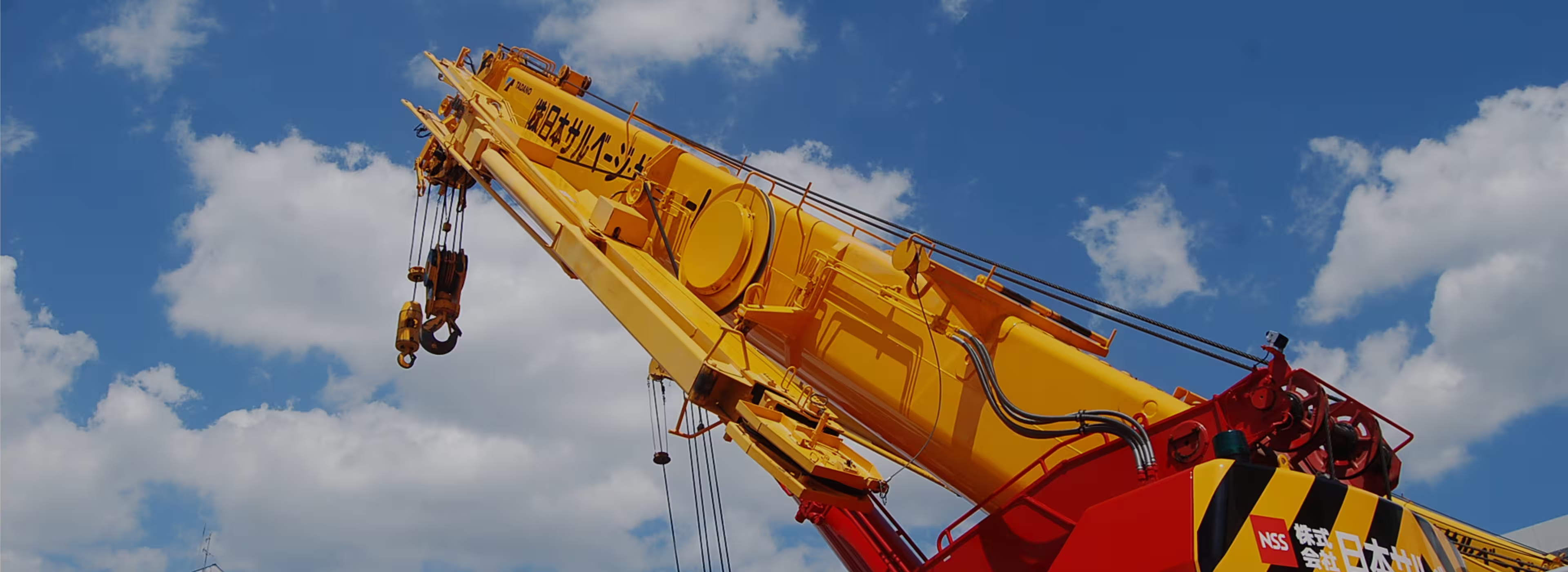
Since its founding, NSS has focused primarily on crane operations and crane rental services, supporting regional construction demand. During the postwar reconstruction period, the company was involved in numerous building and infrastructure projects, steadily developing its core expertise in crane operation, safety management, and on-site execution.
At the time, even major construction companies did not have sufficient equipment resources, and NSS cranes played an important role across a wide range of job sites.
Through the accumulation of these achievements, NSS established strong relationships of trust with the local community and became an essential presence in the development of Kyoto’s urban infrastructure.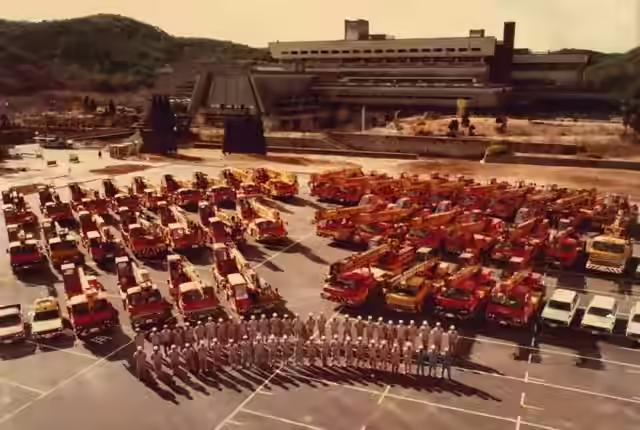
- 1960~
High-Growth Era Expansion: Hydraulic Crane Adoption and Base Expansion
During Japan’s period of rapid economic growth in the 1960s and 1970s, NSS also experienced significant business expansion. The company strengthened its equipment fleet through the introduction of hydraulic cranes and built a system capable of responding to a wide range of construction needs, including steel frame erection, bridge construction, and the installation of large-scale equipment.
At the same time, NSS gradually expanded its operational bases throughout Kyoto City and surrounding areas, establishing a locally rooted service network. By responding to the increasingly sophisticated and diverse demands of construction sites, the company achieved steady growth alongside the local community.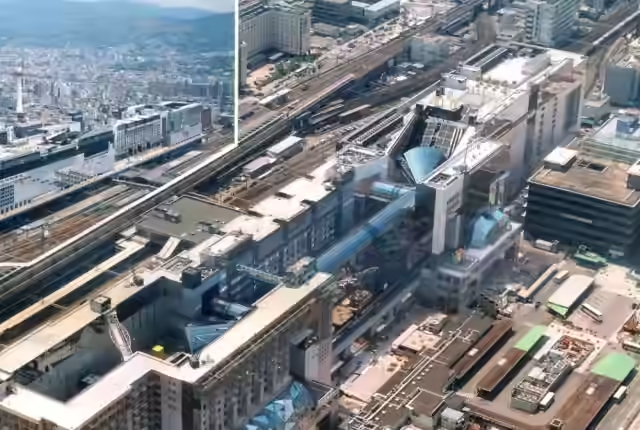
- 1980~
Participation in Large-Scale Projects and Expansion into Logistics
During the 1980s and 1990s, NSS took part in numerous larger-scale and more technically advanced projects, steadily building a strong track record of achievement.
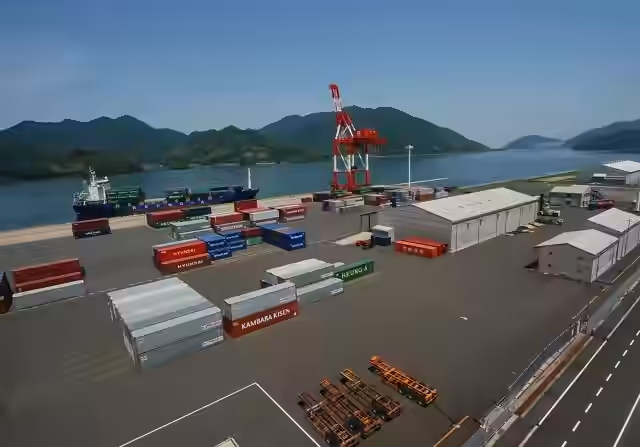
In the 1990s, NSS obtained authorization from the Kinki District Transport Bureau and officially entered the logistics and transportation sector. The company established an integrated system covering warehouse storage, domestic transportation, and on-site delivery, enabling it to provide comprehensive services supporting the construction industry.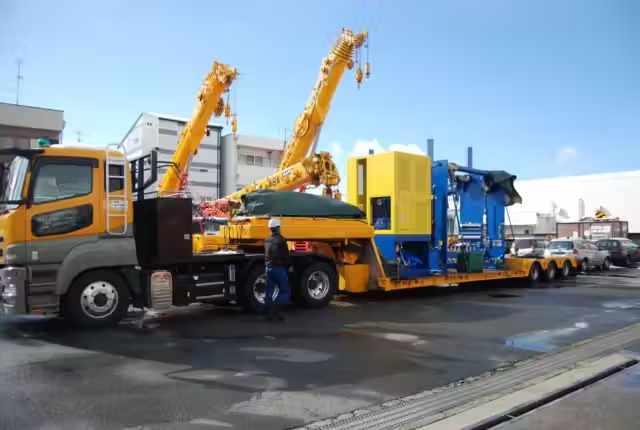
- 2000~
Advancing On-Site Expertise and Expanding into Global Logistics
Since the 2000s, NSS has focused on strengthening its safety management and personnel training systems. Through numerous achievements, including disaster relief support efforts, the company has established a strong reputation as a comprehensive on-site partner supporting regional industries.
At the same time, NSS achieved steady growth in its logistics business, expanding beyond domestic logistics into international multimodal transport. Through this development, the company has advanced its logistics services onto a global stage.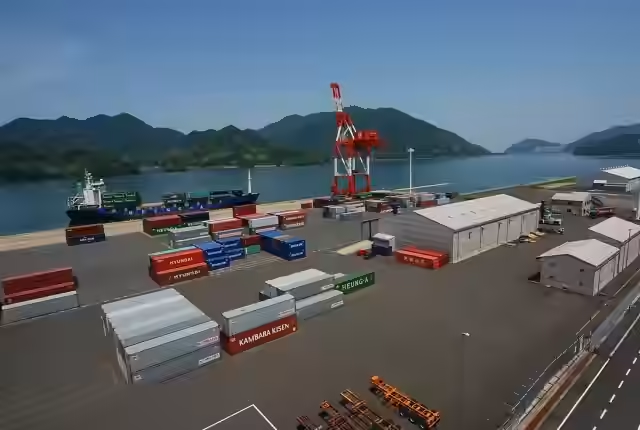
- 2020~
Expanding Business Domains: Contributing to a Sustainable Society
Entering the 2020s, NSS began accelerating the development of businesses addressing emerging social challenges, in addition to its traditional construction and logistics operations. The company has engaged in sustainable construction utilizing CLT (Cross-Laminated Timber) and, through collaboration with universities, local governments, and the forestry sector, has promoted the circular use of regional resources.
In addition, NSS has expanded into the energy sector through the planning and installation of EV charging infrastructure, while also developing cultural and educational projects utilizing the Cinema Truck and other mobile cultural spaces. Through these initiatives, the company continues to evolve into an organization that operates across diverse fields.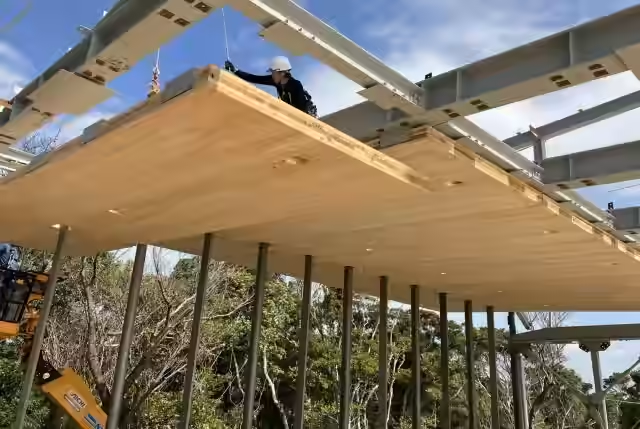
Toward the Future:
Creating Value with Communities
Staying close to local communities,
NSS will continue to enhance its technology and creativity to deliver new value for the future.